
ABSTRACT
This project presents a low-power embedded system for human presence detection using an MLX90614 thermal sensor interfaced with a TM4C123GXLmicrocontroller. The system detects objects based on temperature using an adaptive threshold derived from ambient conditions, improving accuracy. To reduce power consumption, the system operates in Sleep, Deep Sleep, and Hibernate modes during inactivity.
A push button (SW2) is used to wake the system from hibernate mode. The design ensures efficient power usage and reliable operation, making it suitable for smart surveillance and energy-efficient automation applications.
I.INTRODUCTION
Continuous monitoring systems are widely used in applications such as surveillance, security, and automation. However, these systems often consume significant power due to continuous operation, making them inefficient for energy-constrained environments.
This project presents a low-power embedded system for human presence detection using an MLX90614 infrared thermal sensor interfaced with a TM4C123GXL microcontroller. The system measures object and ambient temperatures and uses an adaptive threshold, calculated as the sum of ambient temperature and a fixed offset, to detect the presence of a human.
When the object temperature exceeds the threshold, the system generates an alert using an LED indicator and buzzer. During periods of inactivity, the system transitions into low-power modes such as Sleep, Deep Sleep, and Hibernate to reduce energy consumption. A hardware wake-up mechanism using a push button (SW2) allows the system to resume operation from hibernate mode.
This approach combines thermal sensing with power optimization to achieve reliable detection and efficient operation, making it suitable for smart monitoring and energy-efficient embedded applications.
1.1 Thermal Sensor
The MLX90614 is a non-contact infrared temperature sensor used to measure the temperature of objects based on emitted infrared radiation. Unlike thermal imaging sensors, it provides a single-point temperature reading rather than a pixel array.
The sensor consists of a thermopile detector that captures infrared radiation from the target object and converts it into an analog signal proportional to the temperature. This signal is processed internally using a built-in Analog-to-Digital Converter (ADC) and digital signal processing unit to produce accurate temperature values.
The MLX90614 provides both object temperature and ambient temperature readings, which are essential for implementing adaptive threshold-based detection. It communicates with the microcontroller using the I2C protocol and offers high accuracy with low power consumption.
Due to its compact design, ease of interfacing, and reliable performance, the MLX90614 is well suited for embedded applications such as human detection, temperature monitoring, and energy-efficient sensing systems.
1.2 Buzzer
A buzzer is an audio output device used to generate sound alerts in embedded systems. In this project, a buzzer is used to indicate the detection of a human presence based on thermal sensing.
The buzzer operates by converting electrical signals into sound waves. When the microcontroller outputs a HIGH signal to the buzzer pin, it produces an audible tone, alerting the user. When the signal is LOW, the buzzer remains OFF.
In the implemented system, the buzzer is activated when the measured object temperature exceeds the calculated threshold, indicating detection. It remains OFF during normal or idle conditions. This provides a simple and effective real-time alert mechanism.
The buzzer is interfaced with the microcontroller through a GPIO pin, making it easy to control using embedded C code. Due to its low cost, low power consumption, and ease of integration, it is widely used in alarm systems, security devices, and notification systems.
1.3 Low Power Operation and Wake-up Mechanism
Power efficiency is an important requirement in embedded monitoring systems. To reduce energy consumption, the microcontroller operates in multiple low-power modes during periods of inactivity.
A timer-based approach is used to track idle duration. If no object is detected for a predefined time, the system progressively transitions through different power modes: Sleep mode after short inactivity, Deep Sleep mode after a longer duration, and Hibernate mode for extended idle periods.
In Sleep and Deep Sleep modes, the CPU is temporarily halted while essential peripherals remain active. In Hibernate mode, most of the system is powered down to achieve maximum power savings.
The system is reactivated from hibernate mode using a hardware wake-up mechanism through a push button (SW2). Upon waking, the microcontroller reinitializes the peripherals and resumes thermal sensing operation.
This approach minimizes unnecessary processing and significantly reduces power consumption while maintaining reliable system functionality.
1.4 Project Overview
The proposed system integrates thermal sensing and low-power operation into a compact embedded platform. It detects human presence by measuring object and ambient temperatures using a thermal sensor and applying an adaptive threshold for reliable detection.
Instead of continuous operation, the system reduces power consumption by transitioning between Sleep, Deep Sleep, and Hibernate modes during periods of inactivity. A hardware wake-up mechanism using a push button allows the system to resume operation when required.
This design ensures efficient resource utilization and reliable monitoring, making it suitable for applications such as smart surveillance, automatic lighting, and energy-efficient security systems.
II.BACKGROUND STUDY
The development of energy-efficient monitoring systems has become increasingly important in applications such as security, surveillance, and automation. Conventional monitoring systems often rely on continuous operation, leading to high power consumption and reduced efficiency, especially in battery-powered environments.
Many traditional systems use visible-light cameras, which are dependent on lighting conditions and may not perform effectively in low-light or nighttime environments. To overcome these limitations, infrared-based thermal sensing has emerged as a reliable alternative, as it detects objects based on temperature rather than visible light.
In addition, low-power embedded system design plays a crucial role in improving system efficiency. Modern microcontrollers support multiple power-saving modes such as sleep, deep sleep, and hibernate, allowing systems to minimize energy consumption during idle periods.
By combining thermal sensing with low-power operation, embedded systems can achieve reliable detection while significantly reducing power usage, making them suitable for smart monitoring and energy-efficient applications.
2.1 Infrared Temperature Sensing
Infrared temperature sensing is a technique used to measure the temperature of an object without physical contact by detecting the infrared radiation emitted from its surface. All objects emit infrared energy based on their temperature, making this method effective even in low-light or dark environments.
The MLX90614 sensor used in this project operates based on this principle. It contains a thermopile detector that senses infrared radiation and converts it into an analog signal proportional to the objectaˆs temperature. This signal is internally processed and converted into digital values using a built-in Analog-to-Digital Converter (ADC).
Unlike thermal imaging systems, the MLX90614 provides a single-point temperature measurement rather than a full image. It outputs both object temperature and ambient temperature, which are used in this system to implement an adaptive threshold for detection.
Infrared temperature sensing is widely used in applications such as human detection, temperature monitoring, industrial control, and energy-efficient embedded systems due to its accuracy, reliability, and non-contact nature.
2.2 Low Power Embedded Systems
Low-power design is an important aspect of embedded systems, especially in applications where continuous operation leads to high energy consumption. Microcontrollers such as the Tiva C LaunchPad support multiple power-saving modes, including sleep, deep sleep, and hibernate modes.
In sleep mode, the CPU is halted while peripherals remain active, allowing quick recovery with minimal power savings. In deep sleep mode, the system operates at a lower clock frequency to further reduce power consumption. Hibernate mode provides maximum power saving by shutting down most of the system components.
In this project, a timer-based approach is used to monitor system inactivity and transition between these power modes. The system progressively enters sleep, deep sleep, and hibernate states based on idle duration. A hardware wake-up mechanism using a push button (SW2) allows the system to resume operation from hibernate mode.
The use of multiple low-power modes combined with controlled wake-up ensures efficient energy utilization and reliable system performance.
2.3 Event-Driven System Design
Event-driven systems operate based on specific conditions or events rather than continuous processing. In this project, the system behavior is driven by temperature-based detection and inactivity timing.
The microcontroller continuously monitors object and ambient temperature values from the thermal sensor. An event is generated when the object temperature exceeds the calculated threshold, indicating the presence of a human. This triggers an alert using an LED and buzzer.
In the absence of detection, the system uses a timer-based approach to monitor idle duration and transitions into low-power modes such as sleep, deep sleep, and hibernate. A hardware wake-up event using a push button (SW2) brings the system back to active mode.
This event-driven approach reduces unnecessary processing, improves energy efficiency, and ensures reliable system operation.
2.4 Relevance to Smart Monitoring Systems
The integration of infrared temperature sensing and low-power operation makes this system suitable for various smart monitoring applications. Human presence can be detected based on temperature differences, even in low-light or dark environments, ensuring reliable operation.
The use of adaptive threshold detection improves accuracy by considering ambient conditions, reducing false detections.
Additionally, the implementation of multiple low-power modes allows the system to conserve energy during idle periods.
Such systems can be applied in areas such as smart surveillance, automatic lighting control, security systems, and energy-efficient automation. The ability to detect presence and optimize power usage makes the design practical for real-world embedded applications.
III.SYSTEM ARCHITECTURE
The system architecture of the proposed low-power thermal sensing system consists of the MLX90614 thermal sensor, TM4C123GXL microcontroller, output devices (RGB LED and buzzer), and a hardware wake-up mechanism.
The MLX90614 sensor is interfaced with the microcontroller using the I2C protocol (PB2/PB3) to provide object and ambient temperature data. The TM4C123GXL microcontroller processes this data and applies threshold-based detection logic to determine the presence of a human.
Based on the detection result, the system controls output devices such as RGB LEDs (PF1aˆPF3) and a buzzer (PD0) to indicate system status and alerts. UART communication is used for monitoring and debugging purposes.
To optimize power consumption, the system incorporates multiple power modes, including Sleep, Deep Sleep, and Hibernate, controlled using an internal idle timer. During hibernate mode, most system components are turned off, including the thermal sensor power (PE1).
A hardware wake-up mechanism is implemented using the SW2 push button (PF0), which is connected to the hibernate wake pin. Pressing the button generates a wake event, allowing the system to resume operation from low-power mode.
This architecture ensures efficient interaction between sensing, processing, output indication, and power management, enabling reliable and energy-efficient operation.
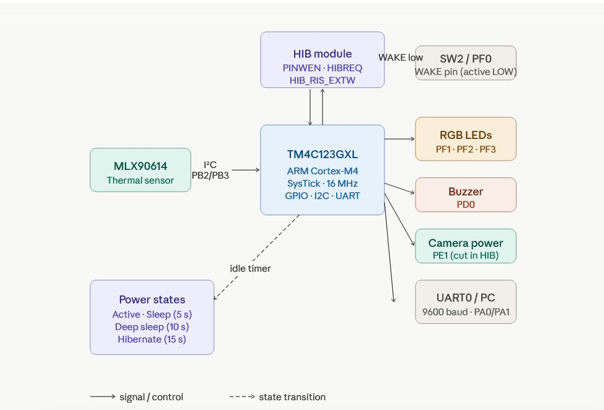
Figure 1: System Architecture
3.1 Data Flow
- MLX90614 Sensor → Microcontroller: Object and ambient temperature data (I2C communication via PB2/PB3)
- Microcontroller → RGB LEDs: Status indication (PF1aˆPF3)
- Microcontroller → Buzzer: Alert signal during detection (PD0)
- Microcontroller → Thermal Sensor Power: Control signal to enable/disable sensor (PE1)
- SW2 Push Button → Microcontroller: Wake-up signal from hibernate mode (PF0)
- Microcontroller → UART: Debug and monitoring data to PC (PA0/PA1)
IV.SYSTEM IMPLEMENTATION
The implementation of the proposed low-power thermal sensing system is carried out using the TM4C123GXL (Tiva C) microcontroller and the MLX90614 infrared temperature sensor. The system is designed to perform temperature-based human detection while minimizing power consumption through multiple low-power operating modes.
The MLX90614 sensor is interfaced with the microcontroller using the I2C protocol to obtain object and ambient temperature readings. These values are processed to calculate a dynamic threshold, which is used to determine the presence of a human.
The system uses GPIO pins to control output devices such as RGB LEDs and a buzzer for indication and alert generation.
UART communication is implemented for debugging and monitoring system behavior.
A timer-based approach using the SysTick module is employed to track system inactivity. Based on idle duration, the microcontroller transitions into Sleep, Deep Sleep, and Hibernate modes to reduce power consumption.
The hibernate mode is configured using the internal HIB module, and a hardware wake-up mechanism is implemented using the SW2 push button. Upon wake-up, the system reinitializes peripherals and resumes normal operation.
This implementation ensures efficient integration of sensing, processing, and power management, resulting in a reliable and energy-efficient embedded system.
4.1 Microcontroller Initialization
The microcontroller initialization involves configuring essential peripherals for system operation. GPIO pins are set up to inter-face with the RGB LEDs, buzzer, push button (SW2), and sensor power control.
The I2C module is initialized to communicate with the MLX90614 thermal sensor, and UART is configured for debugging and monitoring. The SysTick timer is used to track system activity and measure idle time for power mode transitions.
The hibernate module is also enabled to support low-power operation and hardware wake-up. This initialization ensures proper functioning of sensing, communication, and power management in the system.
4.2 Thermal Sensor Interface
The MLX90614 thermal sensor is interfaced with the microcontroller using the I2C protocol. It provides both object and ambient temperature readings required for detection.
The microcontroller reads raw temperature data from the sensor registers and converts it into Celsius values using a standard conversion formula. These temperature values are then used for further processing and threshold-based detection.
The simple I2C interface and direct temperature output make the MLX90614 easy to integrate and suitable for real-time embedded applications.
4.3 Low Power Operation
To minimize energy consumption, the system operates in multiple low-power modes based on inactivity duration:
- Sleep Mode: Activated after short idle time, where the CPU is halted while peripherals remain
- Deep Sleep Mode: Activated after longer inactivity, reducing clock operation for additional power
- Hibernate Mode: Activated after extended idle time, where most of the system is powered down to achieve maximum energy efficiency.
A timer-based approach using the SysTick module is used to track idle time. Based on this duration, the system transitions between different power modes. The system is woken from hibernate mode using a hardware push button (SW2), after which normal operation resumes.
4.4 Hibernate Mode
Hibernate mode is the lowest power operating state of the TM4C123GXL microcontroller, where most of the system components are powered down to minimize energy consumption. In this mode, the CPU, system clock, and peripherals are turned OFF, while only the hibernate module remains active.
4.4.1 Working Principle
The hibernate module operates using a low-frequency clock and maintains minimal functionality required for wake-up. When hibernate mode is enabled, the microcontroller sets the hibernate request, and power to the main system is cut. Only the internal hibernate logic remains active.
4.4.2 Wake-up Mechanism
When the system enters hibernate mode, the main power to the microcontroller is turned OFF, and only the hibernate module remains active. This module is powered using the VBAT supply, which ensures that the wake-up logic continues to function even when the rest of the system is shut down.
In this project, the SW2 push button (connected to PF0) is configured as the wake-up source. The wake pin operates as an active-low input. When VBAT is present and the system is in hibernate mode, pressing SW2 pulls the wake pin LOW, generating a wake event.
As a result, the microcontroller exits hibernate mode, restores normal operation, reinitializes all peripherals, and resumes thermal sensing.
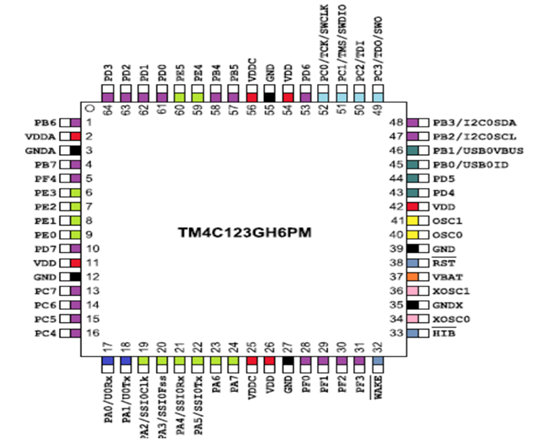
Figure 2: Vbat(Pin37)
4.4.3 Features
• Ultra-low power consumption
• Complete shutdown of CPU and peripherals
• External wake-up using push button
• Suitable for long idle durations
4.4.4 Role in the System
In this project, hibernate mode is activated after prolonged inactivity to reduce power consumption. The thermal sensor is powered OFF during this state, and the system resumes operation only when a wake-up event occurs.
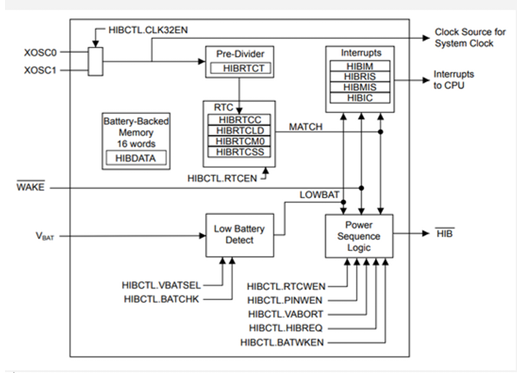
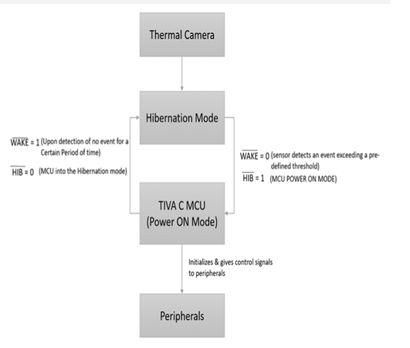
Figure 3: Hibernate Mode
4.5 Main Control Flow
The main program operates in a continuous loop and performs the following steps:
1. Initialize all peripherals including GPIO, I2C, UART, SysTick, and the hibernate module
2. Read object and ambient temperature from the MLX90614 sensor
3. Convert raw data into temperature values and compute the adaptive threshold
4. Compare object temperature with the threshold
• If object temperature exceeds threshold: – Activate LED and buzzer (detection)– Reset idle timer
• Else: – Increment idle timer– Transition to Sleep, Deep Sleep, or Hibernate mode based on idle duration
5. In hibernate mode, wait for wake-up event from SW2 push button
6. Upon wake-up, reinitialize peripherals and resume operation
This control flow ensures efficient detection and minimizes power consumption by dynamically switching between active and low-power states.
V.RESULTS
The implemented system successfully detects human presence based on temperature measurements using the MLX90614 thermal sensor. The system compares object temperature with an adaptive threshold derived from ambient temperature, ensuring reliable detection under varying environmental conditions. When the object temperature exceeds the threshold, the system generates an alert using an RGB LED and buzzer. The system demonstrates stable and accurate detection behavior during testing.
The implementation of multiple low-power modes, including Sleep, Deep Sleep, and Hibernate, effectively reduces power consumption during periods of inactivity. Smooth transitions between these modes were observed, and the system reliably wakes up from hibernate mode using the SW2 push button. Overall, the system achieves efficient detection and power optimization, validating the effectiveness of the proposed design.
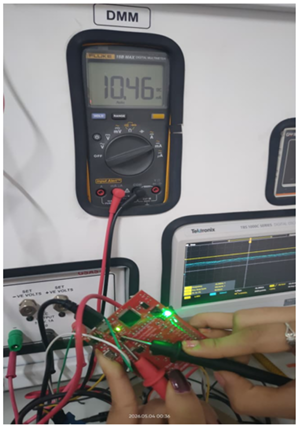
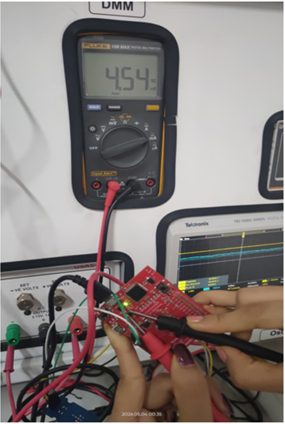
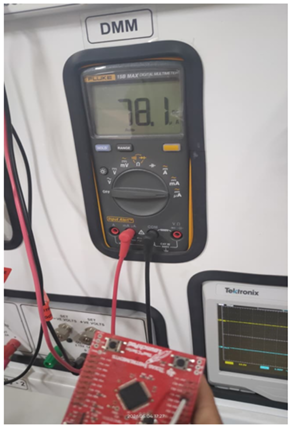
Figure 4: Measured current values in different modes(sleep,deep sleep and Hibernate)
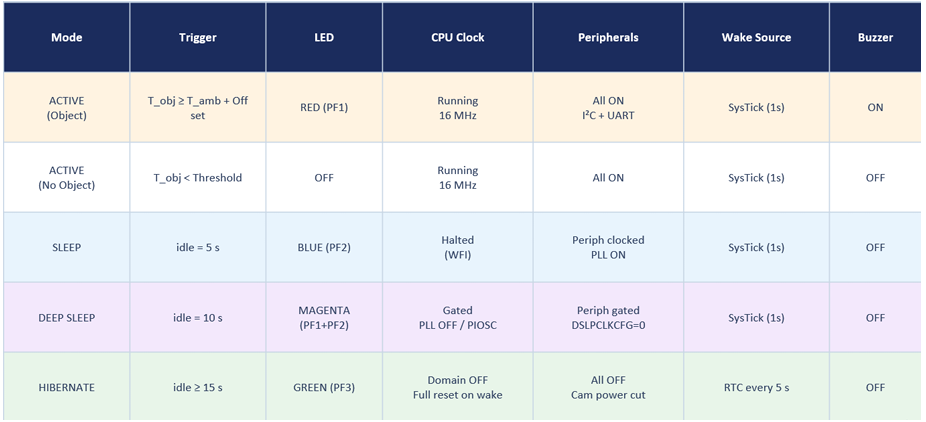
Figure 5: Different modes and their Operation
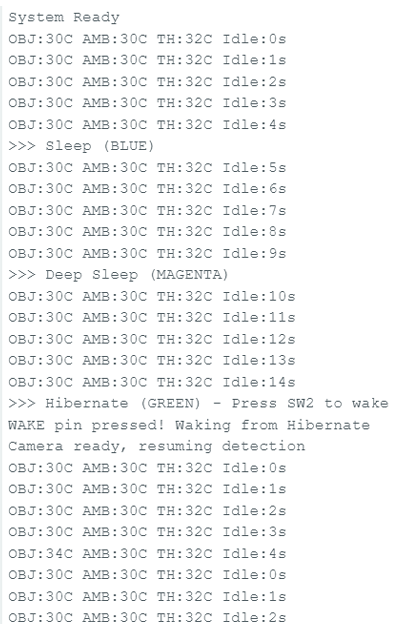
Figure 6: Waking from Hibernate
5.1 Observations
• The system successfully detects human presence when the object temperature exceeds the calculated threshold.
• The adaptive threshold based on ambient temperature improves detection accuracy under different environmental conditions.
• The RGB LED and buzzer provide clear and immediate indication of detection events.
• The system correctly transitions between Sleep, Deep Sleep, and Hibernate modes based on inactivity duration.
• Reliable wake-up from hibernate mode is achieved using the SW2 push button.
5.2 Performance Analysis
The system demonstrates reliable performance with efficient power utilization. The use of an adaptive threshold ensures accurate detection while minimizing false triggers. The implementation of multiple low-power modes significantly reduces energy consumption during idle periods.
The timer-based control mechanism ensures smooth transitions between different power states without affecting system stability. Additionally, the hardware wake-up feature enables quick recovery from hibernate mode, ensuring continuous operation when required. Overall, the system achieves a balance between detection accuracy and energy efficiency, making it suitable for smart monitoring and low-power embedded applications.
VI.CONCLUSION
The low-power thermal sensing system has been successfully designed and implemented using the TM4C123GXL microcontroller and MLX90614 infrared temperature sensor. The system effectively detects human presence by comparing object temperature with an adaptive threshold based on ambient conditions.
The use of thermal sensing enables reliable detection even in low-light environments, while the implementation of LED and buzzer provides immediate indication of detection events. The adaptive threshold approach improves accuracy and reduces false detections.
The incorporation of multiple low-power modes, including Sleep, Deep Sleep, and Hibernate, significantly enhances energy efficiency. The system also demonstrates reliable wake-up from hibernate mode using a hardware push button. Overall, the project achieves efficient detection and power optimization, making it suitable for applications such as smart surveillance, automatic lighting, and energy-efficient embedded systems.
VII.REFERENCES
1. Texas Instruments, “TM4C123GH6PM Microcontroller Datasheet”
2. Melexis, “MLX90614 Infrared Temperature Sensor Datasheet”
3. Texas Instruments, “TivaWare Peripheral Driver Library Documentation”
4. ARM,“Cortex-M4 Technical Reference Manual”
5. Steve Heath, “Embedded Systems Design”, Newnes Publication
Recent Comments